Helping you find
tax information & services


Finance Act 2026

Finance Act 2026: What It Means for You

Key changes, effective dates and what taxpayers need to do

KRA administers tax laws and is committed to making tax information clear, simple and accessible.

Finance Act
2026
 
What Has Changed?

What Has Changed?

The Finance Act, 2026 amended the following laws:

Income Tax Act
Value Added Tax Act
Excise Duty Act
Tax Procedures Act
Miscellaneous Fees and Levies Act
Affordable Housing Act
Stamp Duty Act
Road Maintenance Levy Fund Act

Key Dates and What To Do

Key Effective Dates

1 July 2026
Most amendments take effect.
1 September 2026
New import documentation requirement begins.
1 January 2027
New return filing timelines take effect.

What Taxpayers Should Do

01
Check whether any change applies to you or your business.
02
Review the necessary processes.
03
Keep proper records to support returns and transactions.
04
Follow official KRA channels for implementation guidance.
Income Tax
Income Tax

Income Tax: Filing Deadlines

Individual filing deadlines have changed

From 1 January 2027, individual taxpayers will be required to file income tax returns by the last day of the fourth month after the end of the year of income.

Individual taxpayers use the calendar year, meaning they will be required to file tax returns by 30 April.

Who is affected?

Individual taxpayers
Self-employed persons
Partnerships

Filing Deadlines: What Should You Do?

Companies and other non-individual taxpayers continue to file by the last day of the sixth month after the end of their accounting period.

What should you do?

01
Start preparing tax records earlier.
02
Confirm employment, business and withholding tax information.
03
Review your return before submission.
04
Do not wait until the deadline to begin filing.

Income Tax: Gratuity, Rental Income and Card Payments

Gratuity payments

Gratuity to qualify for tax exemption if the contract of service is for a period of at least three continuous years (or an extension of a three year contract) and the gratuity does not exceed 31% of emoluments earned during that period.

What to do: Ensure that only gratuity payments that meet the above conditions enjoy the exemption.

Non-resident rental income

Non-residents earning rental income from Kenyan property must register under a simplified framework and file and pay tax by the 20th of the following month, unless a resident agent is withholding on their behalf.

What to do: Review rental arrangements and follow KRA guidance on registration, filing and payment.

Card payment transaction fees

Interchange fees and merchant service fees from card payment transactions are classified as management or professional fees for withholding tax purposes.

What to do: Banks, fintechs and payment service providers to take note.

Income Tax: Other Business Changes

Selected business and investment changes

Tax treatment of trusts

Income received by trustees, executors or administrators is treated as their income for tax purposes. Where tax has already been paid by the trustee, executor or administrator, the beneficiary will not be taxed again on the same income.

Bad debts by financial institutions

Banks, microfinance institutions and other qualifying financial institutions carrying on money lending business may deduct bad debts, in line with guidelines issued by the Commissioner. A bad debt shall include the principal, interest and any other amount related to the debt.

Exemption from CGT OF REITs

Capital gains tax (CGT) relating to the transfer of property to a Real Estate Investment Trust registered by the Commissioner are exempt.

Large petroleum and gas storage investments

100% of Investment allowance is deductible in the first year of use for petroleum and gas storage facilities where the investment exceeds KES 10 billion.

Value Added Tax

VAT: Business Transactions

Key VAT changes for businesses

Labour outsourcing services

Employee-related costs such as salaries, wages and statutory deductions are treated as disbursements where a supplier provides labour, outsourcing or employee placement services.

What to do: Businesses to note the amendment.

Hire purchase arrangements

The exclusion of finance charges from taxable value applies only to hire purchase agreements registered under the Hire Purchase Act.

What to do: Hire purchase businesses should ensure that they are licensed under the Hire Purchase Act and the agreements between them and the buyers are registered under the same act.

Period for claiming refund on bad debts

The period for claiming a VAT refund on bad debts has been reviewed from two years to three years.

What to do: Maintain proper records and evidence supporting the bad debt claim.

VAT must only appear on taxable supplies

An invoice showing VAT should only be issued for a taxable supply.

What to do: VAT-registered businesses should confirm the tax status of goods and services before charging VAT.

VAT: Changes to selected Goods and Services

Returning residents

The VAT Act is now aligned with the East Africa Community Customs Management Act (EACCMA) on the threshold of VAT-free goods brought into Kenya by a returning resident which USD 2,000.

Clarification of scope of exempt financial services

Fees charged by payment service providers for digital payment services, including payment processing, settlement, merchant acquiring, gateway and aggregation services, are not exempt from VAT.

Important: This provides a distinction between the standard banking or the traditional financial services and the digital platform operations.

VAT: Selected Goods and Services (continued)

Services of tour operators

The Act defines "tour operator" and "in-house supplies" to clarify the scope of VAT exemption for tour operator services.

Selected exempt items

The Act has also provided exemptions for selected goods and services, including dialyzers, scrap metal, qualifying pharmaceutical inputs, bioethanol vapour stoves and selected infrastructure-related supplies.

Excise Duty

Excise Duty: Selected Changes

Product Change
Bottled water Excise duty removed
Fruit and vegetable juices without added sugar Fruit and vegetable juices with out sugar distinguished from those with sugar and Excise duty retained at KES 14.14 per litre
Fruit and vegetable juices with added sugar or sweetener KES 20 per litre
Specified imported sugar KES 40 per kilogram (subject to stated exclusions)
Antique, vintage and classic vehicles 50% of excisable value
Betting (including on horse racing) and gaming deposits Excise duty of 5% is charged on amount deposited for betting purposes.
For antique, vintage and classic vehicles, the vehicle must: have been first registered at least 30 years before purchase; and have a value of at least KES 10 million, excluding depreciation.

Excise Duty: What Should Businesses Do?

01
Confirm the correct tariff code and applicable rate.
02
Update pricing and tax calculations.
03
Note the effective date.
04
Update customs, excise and accounting systems.
05
For betting and gaming operators: review system treatment of deposits and ensure correct excise accounting.
Effective date: 1 July 2026 | Legal reference: Finance Act; Excise Duty Act schedules.
Tax Procedures

Tax Procedures: Key tax administration changes

Tax amnesty

The tax amnesty on penalties, interest and fines introduced for liabilities due up to 31 December 2025. Where principal tax is outstanding, it must be paid by 31 December 2026 to qualify for the amnesty, subject to the applicable conditions.

Pre-populated tax returns

KRA may issue pre-populated returns using available taxpayer information. A taxpayer may confirm or amend the return.

What to do: Review all pre-filled information carefully before submission.

Electronic tax systems

Where a taxpayer fails to issue an electronic invoice, file electronically or pay electronically, KRA will issue a notice and consider the taxpayer's explanation before applying the relevant penalty. System-generated errors may qualify for waiver of penalties or interest, subject to the law.

What to do: Keep screenshots, support tickets and correspondence where a system issue affects compliance.

Imports, Fees and Other Laws

Imports, Fees and Other Laws

New documentation requirement for imports

From 1 September 2026, importers must obtain and retain an export declaration, export entry, customs export certificate or equivalent document from the country of export. The document should support importation of goods into Kenya.

What should importers do?

  • Request export documentation from suppliers.
  • Keep the records for at least five years.
  • Ensure the documents show exporter, importer, goods description, quantity, value, tariff classification and country of export.
  • Produce the documents when requested by KRA.
Failure to produce satisfactory documentation may affect claims relating to value, origin, ownership, exemptions, deductions or refunds.

Other Selected Changes

The Act also includes changes affecting the following areas. Affected taxpayers should refer to the Finance Act and subsequent official KRA guidance.

Virtual asset service providers – requirement to file an information Return, among other changes.
PIN reinstatement for deregistered persons
Exemption of non-residents opening accounts with investment banks and financial institutions from requirement to have a PIN.
Provisions on tax avoidance schemes moved from the relevant revenue acts to the Tax Procedures Act.
Recovery of unpaid fees, levies and charges on agency taxes collected by KRA
Import Declaration Fee and Railway Development Levy exemptions for selected goods
Affordable Housing Levy collection fees
Exemption from Stamp duty for REIT transfers
Road Maintenance Levy Fund allocation
Compliance Checklist

What Should You Do Next?

Individuals

  • Prepare return information earlier.
  • Review any pre-populated return carefully.
  • Check whether any of the amended provisions apply to you.

Employers

  • Note new conditions with regard exemption of gratuity payments.
  • Update payroll records and filing calendars.
  • Prepare employee tax information early.

Businesses

  • Note changes to VAT status of certain goods and services.
  • Check withholding tax treatment for affected payments.
  • Maintain proper records to support tax claims.
  • Document any system errors affecting compliance.

Importers

  • Obtain export declarations or equivalent documents.
  • Retain records for at least five years.
  • Confirm tariff classification and applicable VAT, excise, IDF or RDL treatment.

Sector-specific taxpayers

Businesses in all sectors affected to review the changes and adjust accordingly.

Regularly check the KRA Website or social media platforms for operational guidance provided.

Frequently Asked Questions

Do all changes begin on 1 July 2026?
No. Most changes take effect on 1 July 2026. The import documentation requirement begins on 1 September 2026, while new income tax filing timelines begin on 1 January 2027.
Has the individual filing deadline changed?
Yes. From 1 January 2027, individual taxpayers will file their tax returns by the last day of the fourth month after the end of the year of income. For all individuals, this means 30 April.
Does tax amnesty remove principal tax?
No. Tax amnesty applies to qualifying penalties, interest and fines. For a person to enjoy the tax amnesty, the principal tax must be fully paid in accordance with the law.
Q: Will everyone receive a pre-populated return?
A: The Act allows KRA to issue pre-populated returns. Further guidance will be provided to clarify the operational process and affected taxpayers.
Q: What if an electronic system error affects my compliance?
A: Ensure you keep evidence such as screenshots, support tickets and communication records. The Act allows consideration of system-generated errors for waiver of penalties or interest, subject to the law.
Understanding your obligations makes compliance easier. KRA will continue providing clear guidance to support taxpayers as the Finance Act 2026 changes are implemented.


Excise Stamp Guidance

Returning Unused V4 Excise Stamps for Bottled Water

Pursuant to the Finance Act, 2026, which amended the First Schedule to the Excise Duty Act, CAP472, bottled water ceased to be an excisable product with effect from 1 July 2026. Consequently, bottled water manufactured or imported on or after this date is not subject to Excise Duty and does not require excise stamps.

Taxpayers holding unused V4 excise stamps for bottled water as at 1 July 2026 are required to return the stamps to the Kenya Revenue Authority (KRA) in accordance with these guidelines. However, taxpayers should note that, bottled water lawfully manufactured or imported and stamped before 1st July 2026 may continue to be sold with the affixed stamps.

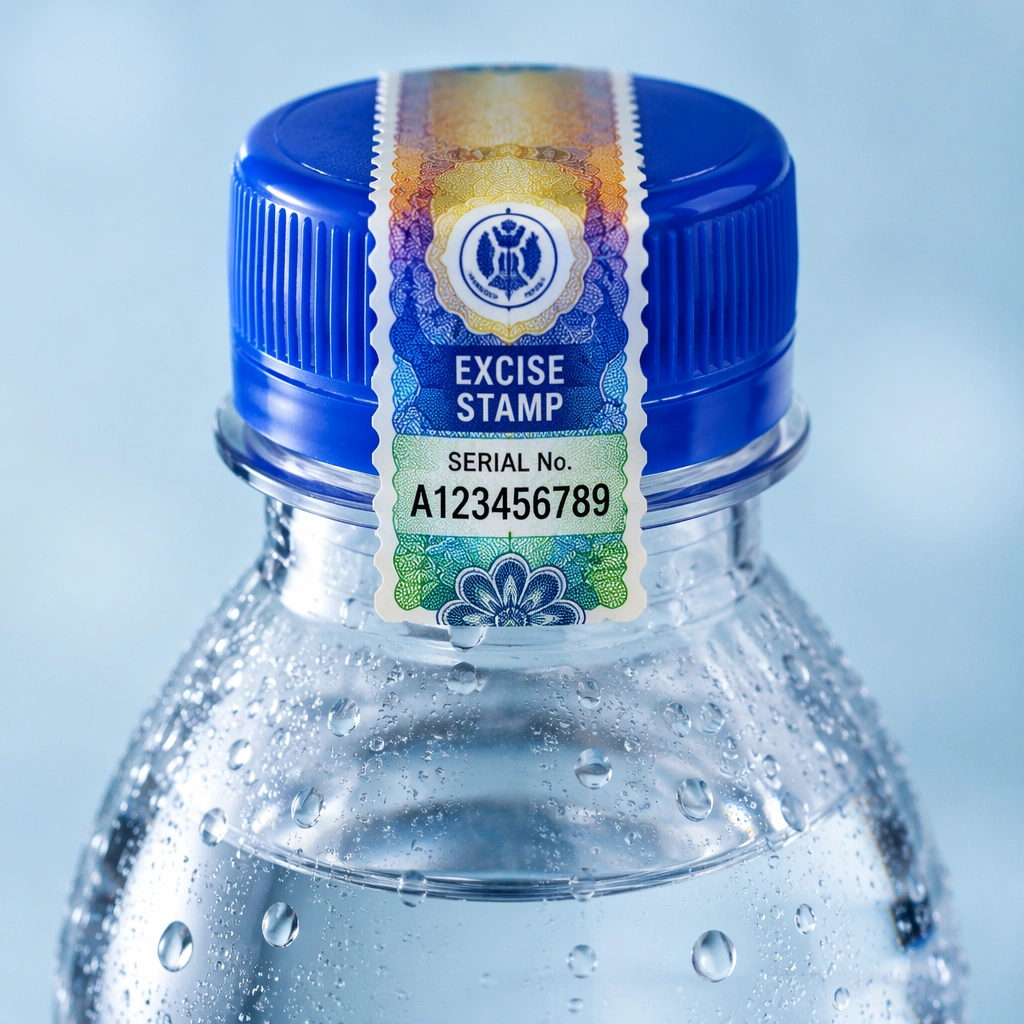
Bottled water bearing an excise stamp
Effective Date
1 July 2026
Who Should Use This Guide
Licensed manufacturers and registered importers of bottled water holding unused V4 excise stamps.
Stamps Covered
Unused V4 excise stamps held as at 1st July 2026.

Purpose

These guidelines provide taxpayers with the standard procedure for initiating, submitting and completing the return of unused V4 excise stamps through the Excise Goods Management System (EGMS) and the subsequent physical return of the stamps to KRA.

Scope

The guidelines apply to all licensed manufacturers and registered importers of bottled water holding unused V4 excise stamps as at 1st July 2026.

Return Journey

How the Return Process Works

The taxpayer shall be required to initiate the return of the unused excise stamps through their EGMS account.

1
Submit the return request in EGMS
2
KRA processes the application
3
Tax Service Office verifies the stamps
4
Book a vault appointment and return the stamps
5
Receive further guidance where applicable

Procedure for Returning Unused V4 Excise Stamps

STEP 01

Taxpayer shall be required to log into EGMS with valid credentials and the necessary system rights to access the Operations module on EGMS to initiate the return of the unused excise stamps.

STEP 02

Upon submission of the excise stamps return request in the EGMS system, KRA shall process the application and either approve or reject the request.

STEP 03

The process of returning unused excise stamps consists of the following stages:

a) Return of full packaging units (stamp reels) in EGMS.
b) Return of individual paper stamps or a range of paper stamps in EGMS.
c) Physical return of the excise stamps to KRA Vault.

Where the Application Is Rejected

The taxpayer shall get a notification stating the reasons for rejection through their EGMS registered email address.

Where the Application Is Approved

The taxpayer shall get a notification stating the next course of action through their EGMS registered email address.

Reimbursement Assessment

Where applicable, KRA shall determine whether the taxpayer qualifies for reimbursement in accordance with the applicable laws and procedures.

Select the Type of Stamps You Are Returning

Follow the procedure that corresponds to the unused excise stamps in your possession.

Return Option 1

Full Packaging Units

Excise stamp reels.

View Packaging Unit Steps →
Return Option 2

Individual or Range of Paper Stamps

Individual paper stamps or a range of paper stamps.

View Paper Stamp Steps →
4.1 Return of Full Packaging Units (Excise Stamp Reels) in the EGMS System

Once you log into your EGMS system account;

1

Select Operations > Return of Packaging Units to display the form with mandatory selections/entries marked with *.

2

The EGMS site will automatically populate for taxpayers with one site. For taxpayers with many sites, select the relevant site in the Manufacturer/Importer field.

3

Then select Reason → damaged or defective

4

Enter the Packaging Unit number in the Packaging Unit Id field. The PU Id is composed of 1 letter (E, R or P) followed by 15 numerical digits.

5
Important – Reimbursement

To have funds reimbursement of the PU(s) you are returning, DO NOT TICK the Request replacement check box. This means that your EGMS account will be credited once your return request is approved.

6

Click the Add button.

7

Result: the table is populated with the corresponding PU information: Barcode, PU Type, Status and Location.

8

If you wish to add more Packaging Unit Ids, then redo steps 4 and 6 above. If you wish to remove the Packaging Unit from the table before confirming any actions, then click on the associated icon.

9

Click on the Confirm Return button to continue.

10

Result: The Confirm Return of Packaging Units window is opened, to enter your valid EGMS credentials.

11

Click the Confirm button to place a request for a Return of PU to KRA. Result: A message Operation completed successfully is displayed in the main window.

4.2 Return of Individual or Range of Excise Paper Stamps in the EGMS System

Once you log into your EGMS system account, follow the following steps;

Important – Reimbursement

To have funds reimbursement of the individual stamp(s) or stamp range(s) you are returning, DO NOT TICK the Request replacement check box. This means that your EGMS account will be credited once your return request is approved.

1

Select Operations > Return of Stamps to display the form with mandatory selections/entries marked with *.

2

Then enter the following information:

a) Select a Manufacturer/Importer from the drop-down list. Select a Reason → damaged or defective

b) Enter the Label barcode number in the open field provided. To declare the return of a range, input the stamp serial numbers separated by a hyphen. However, if you wish to declare the return of individual stamp labels, which may not necessarily follow one another concurrently, input individual stamp serial numbers separated by a comma.

Range Example
000000000000-000000000001
Individual Stamp Example
000000000000,000000000000
3

Click the Add button. If you wish to add more Barcode labels to the list, then redo step 2 above.

4

If you wish to remove the Barcode label from the table before confirming any actions, then click on the associated Remove icon.

5

Confirm return by clicking the Confirm Return button and enter valid EGMS credentials.

Physical Return

4.3 Physical Return of Excise Stamps to KRA Vault

01

Physical Verification

Upon submitting an application in the EGMS system to return the unused V4 Excise stamp, the taxpayer’s respective Tax Service Office (TSO) shall physically verify the returned excise stamps to confirm the quantities and serial numbers against the details submitted in EGMS.

02

Book a Vault Appointment

Upon verification, the taxpayer shall book an appoint for the physical return of the unused excise stamps to the KRA Vault by emailing:

This email address is being protected from spambots. You need JavaScript enabled to view it.
Copy: This email address is being protected from spambots. You need JavaScript enabled to view it.
Tel: 0709 013 504 / 0709 013 939

03

Deliver the Excise Stamps

Upon confirmation of appointment date, deliver the unused excise stamps to KRA vault at Times Tower for receipt and verification by the vault team.

5. Reimbursement Process

Once the stamps are received at the KRA Vault and approved in the system, KRA shall provide further guidance on the process of reimbursement, where they qualify.

Taxpayers shall upon conclusion of the process, pay taxes due, initiate the process of cancellation of their Excise license/import registration certificate and retirement of Excise Security Bond.

6. Assistance

For any clarifications and facilitation, please contact the Enforcement Office on

Email
This email address is being protected from spambots. You need JavaScript enabled to view it.

These are points where goods and people can enter and exit the country, legitimate businesses can be conducted with security provided by the government. At these points of entries and exit, you will meet border agencies such as

  • Kenya Revenue Authority (KRA),
  • Immigration department,
  • Kenya Bureau of Standards (KEBS)
  • Kenya Plant Health Inspectorate Service (KEPHIS),
  • Port Health,
  • Kenya Ports Authority KPA,
  • Kenya Airports Authority KAA
  • National Police Service NPS
  • and Participating Government Agencies

Kenya has thirty-five (35) points of entry and exit, commonly known as BORDERS. Kenya shares borders with five countries, Ethiopia for 867km , Uganda for 933km, Somalia for 684km, Tanzania for 755km, South Sudan 317km and International waters (Indian Ocean) for 536km.

The points of entry and exit are put into three categories; Land borders, Maritime borders and Air borders. Currently Seven land borders have been upgraded to one stop border Posts (OSBPs).


Land Borders

Maritime Borders

Air  Borders

Mandera (closed)

Liboi  (closed)

Kiunga  (closed)

Lunga-lunga OSBPs

Taveta OSBPs

Loitokotok

Namanga OSBPs

Isebania OSBPs

Sand river gate  (closed)

Muhuru-bay

Malaba OSBPs

Busia OSBPs

Lwakhakha

Suam

Moyale OSBPs

Nadapal

Kilindini

Kilifi

Shimoni

Lamu

Kisumu pier

Mbita

Ngomeni (closed)

Vanga

Oldport

Malindi


Jomo Kenyatta International Airport

Mombasa International Airport

Kisumu International Airport

Malindi Airport

Eldoret International Airport

Wilson Airport

Wajir Airport

Lokichogio

Isiolo airport


Find a KRA Office

Search by office name, town or location, or filter the list by region.

NAIROBI REGION

Times Tower

Haile Selassie Avenue, Nairobi

Get directions


NAIROBI REGION

Sameer Business Park

Mombasa Road, Nairobi

Get directions
NAIROBI REGION

KESRA Centre, Nairobi

Westlands, Nairobi

Get directions
NAIROBI REGION

Ushuru Pension Towers (CBC)

Upper Hill, Nairobi

Get directions
NAIROBI REGION

Ushuru Pension Plaza

Westlands, Nairobi

Get directions
NAIROBI REGION

JKIA – Forodha House

Airport North Road, Nairobi

Get directions
NAIROBI REGION

Inland Container Depot

Mombasa Road, Nairobi

Get directions
NAIROBI REGION

Wilson Airport

Wilson Airport, Nairobi

Get directions
NAIROBI REGION

Nairobi Warehouse – Supplies Branch

Industrial Area, Nairobi

Get directions
NAIROBI REGION

Nairobi Post Parcel Office – City Square

Haile Selassie Avenue, Nairobi

Get directions
NAIROBI REGION

Nairobi Warehouse – ICD Business Park

Mombasa Road, Nairobi

Get directions
WESTERN REGION

Lake Basin Mall – Kisumu

Kisumu–Kakamega Road

Get directions
WESTERN REGION

Kisumu Warehouse – Victoria Business Park

Kisumu

Get directions
WESTERN REGION

Kisumu Pier

Lake Victoria Pier, Kisumu

Get directions
WESTERN REGION

Kisumu Kenya Pipeline Corporation

Outering Road, Kisumu

Get directions
WESTERN REGION

KRA Bungoma Office – Moghe Plaza

Bungoma

Get directions
WESTERN REGION

KRA Kakamega Office – Telephone House

Kakamega

Get directions
WESTERN REGION

KRA Kisii Office – Posta Building

Kisii

Get directions
WESTERN REGION

KRA Kopanga Office

Kopanga Shopping Centre

Get directions
WESTERN REGION

KRA Nyamtiro Office

Nyamtiro Shopping Centre

Get directions
WESTERN REGION

KRA Muhuru Bay Office – Dorcas Building

Muhuru Bay

Get directions
WESTERN REGION

KRA Port Victoria Office – Jopewi Investment Ltd

Port Victoria

Get directions
WESTERN REGION

KRA Lwakhakha Border Station

Lwakhakha

Get directions
WESTERN REGION

KRA Siaya Office – Walter Plaza

Siaya

Get directions
WESTERN REGION

KRA Migori Office – Pinnacle Plaza

Migori

Get directions
WESTERN REGION

KRA Homabay Office – Odhiambo Plaza

Homabay

Get directions
SOUTHERN REGION

Mombasa TSO – Customs House

Mombasa

Get directions
SOUTHERN REGION

Hola – Hola Town Building

Hola, Tana River

Get directions
SOUTHERN REGION

Port Operations – KPA Cruise Ship Terminal Building

Kilindini

Get directions
NORTH RIFT VALLEY REGION

Eldoret – Kiptagich House

Eldoret

Get directions
NORTH RIFT VALLEY REGION

Eldoret EIA – Airport Warehouse

Eldoret

Get directions
NORTH RIFT VALLEY REGION

Eldoret EIA – Airport Baggage Hall

Eldoret

Get directions
NORTH RIFT VALLEY REGION

Eldoret EIA – Scanner

Eldoret

Get directions
NORTH RIFT VALLEY REGION

Eldoret Postal Corporation

Eldoret

Get directions
NORTH RIFT VALLEY REGION

Kitale – Mega Centre

Kitale

Get directions
NORTH RIFT VALLEY REGION

Lodwar – Loruguru House

Lodwar

Get directions
NORTH RIFT VALLEY REGION

Lodwar – Co-operative Bank Building

Lodwar

Get directions
NORTH RIFT VALLEY REGION

Kakuma – Rehanatu Building

Kakuma

Get directions
NORTH RIFT VALLEY REGION

Kapsabet – Sonoiya Heights

Kapsabet

Get directions
NORTH RIFT VALLEY REGION

Kabarnet – Sunrise Arcade

Kabarnet

Get directions
NORTH RIFT VALLEY REGION

Kapenguria – Kapenguria Kraal

Kapenguria

Get directions
NORTH RIFT VALLEY REGION

Lokichoggio Airport

Lokichoggio

Get directions
SOUTH RIFT VALLEY REGION

Nakuru – Generations House

Nakuru

Get directions
SOUTH RIFT VALLEY REGION

Maralal Tax Service Office (TSO)

Equity Plaza, Maralal

Get directions
SOUTH RIFT VALLEY REGION

Kericho – Sinendet Towers

Kericho

Get directions
SOUTH RIFT VALLEY REGION

Kericho – DC'S Office

Kericho

Get directions
SOUTH RIFT VALLEY REGION

Nyahururu – Ngumo House

Nyahururu

Get directions
SOUTH RIFT VALLEY REGION

Narok Tax Service Office (TSO)

Oltalet Mall, Narok

Get directions
SOUTH RIFT VALLEY REGION

Naivasha – Prema Plaza

Naivasha

Get directions
NORTHERN REGION

Machakos – Sartaj Building

3rd Floor, off Kangundo Road, Machakos

Get directions
CENTRAL REGION

KRA Central Region Headquarters – Nyeri

Nyeri

Get directions


Data Privacy Notice

DATA PRIVACY NOTICE

Kenya Revenue Authority is committed to protecting your personal data in accordance with Data Protection Laws.

1.0 DATA PRIVACY NOTICE

Kenya Revenue Authority is committed to protecting your personal data in accordance with Data Protection Laws. This Privacy Notice provides information on how and why the Kenya Revenue Authority (KRA) collects and processes your personal data and how it is protected. This notice should be read together with the Terms and Conditions of use for other KRA Services. Where there is a conflict, this privacy notice will prevail.

This notice applies to all taxpayers, KRA staff, students, consultants, 3rd parties, development partners and all visitors to any of KRA premises.

2.0 DEFINITIONS
  • The Authority/KRA/We/our/ours/us/ means the Kenya Revenue Authority established under Act of Parliament Chapter 469 of the laws of Kenya.
  • Data Protection Officer is a person designated or appointed by the Authority to monitor compliance with the Data Protection Act 2019, No. 24 of 2019 and the Regulations made under the Act.
  • Data Collection means gathering of information that relates to you.
  • Personal data means information about you that identifies you directly or indirectly as a unique individual such as name, an identification number, location data, an online identifier or one or more factors specific to the physical, physiological, genetic, mental, economic, cultural or social identity of a natural person.
  • Processing means any operation or sets of operations which is performed on your personal data whether or not by automated means, such as: collection, recording, organization or structuring; Storage, adaptation or alteration; Retrieval, consultation or use; Disclosure by transmission, dissemination, or otherwise making available; Alignment or combination, restriction, erasure or destruction.
  • Sensitive personal data is data revealing your racial or ethnic origin, political opinions, professional membership, and the processing of genetic data, biometric data for uniquely identifying a natural person, data concerning health or data concerning a natural person's gender.
  • Third Party means a natural or legal person, public authority, agency or body other than you and KRA, who under the direct authority of KRA are authorized to process your personal data.

You/ Your (s) means:

  1. Taxpayer – a person who holds a Personal Identification number (PIN) and liable for tax under the Kenyan tax law whether or not you have accrued any tax liability in a tax period.
  2. Any person employed by Kenya Revenue Authority
  3. Any student enrolled in the Kenya School of Revenue Administration (KESRA)
  4. Any agent, dealer and/or merchants who has signed an agreement with KRA and is recognized as a merchant or agent in accordance with any applicable laws or Regulations.
  5. Any visitor that is a person (including contractors/subcontractors or any third parties) who gains access to any KRA premises.
  6. Any supplier/ service provider contracted by KRA.
  7. Any external lawyer who has tendered his/her application and/or signed a service level agreement with KRA.
  8. Any Auditor who has signed an agreement with KRA.
3.0 PROCESSING OF PERSONAL DATA

 3.1 Lawful basis for processing your data

The Kenya Revenue Authority processes different categories of personal data as defined and permitted by the applicable Tax Laws, Data Protection Law and its internal policies. We will process your personal information based on any of the following lawful basis as provided for under the Data Protection Act, 2019:

  1. With your consent
  2. Where processing is necessary for fulfilment of the Authority’s mandate.
  3. For the performance of a contract to which you are party to or at your request before entering a contract.
  4. In compliance with any legal obligation to which KRA is subject.
  5. For protecting the vital and legitimate interests of KRA or another person.
  6. For the performance of a task carried out in public interest.
  7. For historical, statistical, or scientific research.

3.2. How KRA collects your data

KRA collects your personal data both directly and indirectly in accordance with the law. We collect your personal information with your knowledge and consent with the exception of cases where prior consent cannot be obtained for real reasons and the processing of the data is permitted by law.

We collect personal data through various platforms: iTax, ICMS, eRecruitment, CCTV cameras, access control, eTIMS, Body Worn Cameras and registers.

3.3. What information is collected

  1. The data we collect from Taxpayers during PIN registration, KESRA students registration, KRA staff, Intern, attaches, Staff dependants, consultants, vendors, visitors, bidders, Researchers, Development Partners  includes and is not limited to the following:  name, postal and physical address, location, phone number, date and place of birth, email address, age, marital status, family details, gender, bank account details, income brackets, profession, supporting personal documents, closed circuit television surveillance recordings, images, voice
  2. KRA collects, but is not limited to, your National Identification Number, passport number, SHIF, NSSF, full name, postal and physical addresses, location, phone number, email address, age, gender, date of birth, and academic information during the job application process.
  3. KRA also collects information that does not personally identify you such as anonymous usage data, general demographic information, referring/exit pages and URLs, platform types, preferences that are generated based on the data that you submit and number of clicks.
  4. Sensitive Personal Data- The Authority collects special category of personal data about you revealing details about your ethnic group, biometric data, property details, marital status, family details including details of your children spouse or spouses, gender, Date of Birth, Disability Status, mobile phone number, Nationality, images, voice and Handwritten Signatures (Handwritten signatures may be used on  documents to ensure accountability and indicate formal approval).

KRA shall ensure that your personal data about you is processed in accordance with your right of privacy and as permitted in Part V of the Data Protection Act, 2019. 

4.0 ACCESS TO YOUR PERSONAL DATA

You have the right to request access to your personal data held by KRA. This includes information on how your data is being used, the purposes of processing and any third parties with whom the data has been shared.

 We take steps to ensure that your personal data is not altered by unauthorized entities or persons. All authorized persons accessing your personal data are bound by a duty of confidentiality.

We may request additional details or ask you to visit our offices to verify your identity and protect your data. This ensures information is only shared with authorized persons and may help us respond to your request more efficiently. 

5.0 HOW KRA USES YOUR PERSONAL DATA
  1. Taxpayers’ data for tax administration purposes.
  2. KESRA student’s data for education administration.
  3. KRA staff data for the execution of the contract of employment and management of employment relationship and benefit processing such as pension.
  4. Staff dependents data for employee dependant benefit processing.
  5. Intern and attaches data for Internship and attachment processing.
  6. Job application data for job application processing.
  7. Administration of procurement functions and contracts.
  8. For research purposes.
  9. To comply with any legal, government or regulatory requirement.
  10. For automated processing, including automated decision-making in risk assessment, fraud detection, and compliance monitoring.
6.0 YOUR LEGAL RIGHTS IN RELATION TO PERSONAL DATA

Subject to legal and contractual provisions, you as a data subject has the:

  1.  Right to be informed that KRA is collecting your personal data
  2. Right to access and request more information about your personal data in KRA.
  3. Right to request KRA to correct your personal data when it is inaccurate or incomplete;
  4. Right to request KRA to erase your personal data noting that KRA may continue to retain your information if obligated by the law or has a legal basis to do so;
  5. Right to object and withdraw consent to processing of personal data. However, KRA may continue to process if there is a legitimate or legal reason to do so.
  6.  Right to lodge a complaint with the relevant supervisory authority that is tasked with personal data protection within the Republic of Kenya

If you have any questions, you can contact us using the details provided in Section 12.0

7.0 TRANSFER OF PERSONAL DATA

KRA shall transfer personal data in a manner that is compatible with the purpose for which it was collected.

In the event that KRA undergoes a business transformation, your personal data may be among the assets to be transferred to new platforms or entities and the acquirer of data assets may continue to process the personal data.

KRA will ensure that during the transfer of your personal data all the risks that might occur are well mitigated. This will be done by conducting a data protection impact assessment on any project that handles personal data to help in identifying the level of risk that can occur and how to prevent the risks.

8.0 DATA SHARING AND DISCLOSURE

We may share your data with:

  1. Other government agencies (e.g., Central Bank, Registrar of Companies, HELB, SHA) as required by law.
  2. Law enforcement agencies for the prevention or detection of crime.
  3. Authorized third-party service providers supporting KRA’s operations (bound by confidentiality and data protection obligations).
  4. International bodies or tax authorities in accordance with applicable treaties.

It is our policy to use only third-party providers that are bound to maintain appropriate levels of security and confidentiality, to process personal information only as instructed by us.

Where necessary KRA may transfer personal data to other countries, stakeholders, partners or entities outside Kenya so long as those countries, stakeholders, partners or entities have equivalent data protection laws.

9.0 PROTECTION OF PERSONAL DATA

The Authority ensures that access to electronic and physical repositories containing your personal data is controlled based on reasonable and appropriate administrative, physical, and organizational safeguards. We implement security measures designed to protect your information from unauthorized access.

Your account is protected by your account password and KRA urges you to take steps to keep your personal information safe by not disclosing your password and by logging out of your account after each use.

By using the Authority’s systems, sites and access services, you acknowledge that you understand and agree to assume these risks. You also accept responsibility not to disclose your PIN and tax information to suspicious individuals.

10.0 RETENTION OF PERSONAL DATA

We will only retain your personal data to fulfil the purposes for which we collect your data and to satisfy any legal requirements to which we are subject.  To determine the appropriate retention period, we consider the size, nature and sensitivity of the personal data, the purposes for which we process the data, the need to comply with internal policies and the applicable legal requirements.

Due to the nature of our mandate, we may retain your personal data indefinitely in administration of a tax law or in compliance with any other legal obligation.

11.0 USE OF COOKIES, EMBEDDED PLUG-INS, CONSENT, WIDGETS & LINKS

The Kenya Revenue Authority website use “cookies” to give you more personal, convenient website visits. This enables us to recognise you during subsequent visits.

You can accept or decline cookies. If you choose to decline cookies, you may not be able to fully experience the interactive features of the Kenya Revenue Authority services or web sites you visit.

Within the Kenya Revenue Authority’s Corporate Website, there are embedded applications, plug-ins, widgets or links to non-Kenya Revenue Authority Websites (collectively “sites”). These sites operate independently of the Kenya Revenue Authority and have their own privacy policies. When you visit these sites, you leave our website and no longer will be subject to our privacy and security policies. The Kenya Revenue Authority is not responsible for the privacy or security practices or the content of other sites, and as such does give an endorsement of those sites or their content.

This website uses cookies to enhance user experience and to analyse performance and traffic on our website. By accessing our website, you agree to the storing of cookies on your device to enhance site navigation and analyse site usage. You also have a right to opt out on nonessential cookies as stated in the privacy 

By clicking 'I Accept' when you visit this website, you confirm that you have read, understood and consent to the provisions to this privacy notice.

COOKIE POLICY

We may store some information (using "cookies") on your computer when you visit our websites. This enables us to recognize you during subsequent visits. The type of information gathered is non-personal (such as: The Internet Protocol (IP) address of your computer, the date and time of your visit, which pages you browsed and whether the pages have been delivered successfully.

We may also use this data in aggregate form to develop customized services - tailored to your individual interests and needs. Should you choose to do so, it is possible (depending on the browser you are using), to be prompted before accepting any cookies, or to prevent your browser from accepting any cookies at all. This will however cause certain features of the web site not to be accessible

12.0. DATA PROTECTION OFFICER CONTACT

Postal Address:
P.O. Box 48240 – 00100
Email Address:
This email address is being protected from spambots. You need JavaScript enabled to view it.
Telephone Number:
0709 012 256

For any additional queries, you may also reach out to our Contact Centre via:

  • Tel: +254 711 099 999
  • Email: This email address is being protected from spambots. You need JavaScript enabled to view it.

13.0 AMENDMENT TO THIS NOTICE

This privacy notice was last updated on 28th April 2026.

We reserve the right to amend this privacy notice at any time. All amendments to this privacy notice will be posted on KRA’s website. Unless otherwise stated, the current version shall supersede and replace all previous versions of the privacy notices.

Latest News and Updates

KRA Headquaters,Times Tower, Haile Selassie Avenue, Nairobi Kenya

Contact Centre